
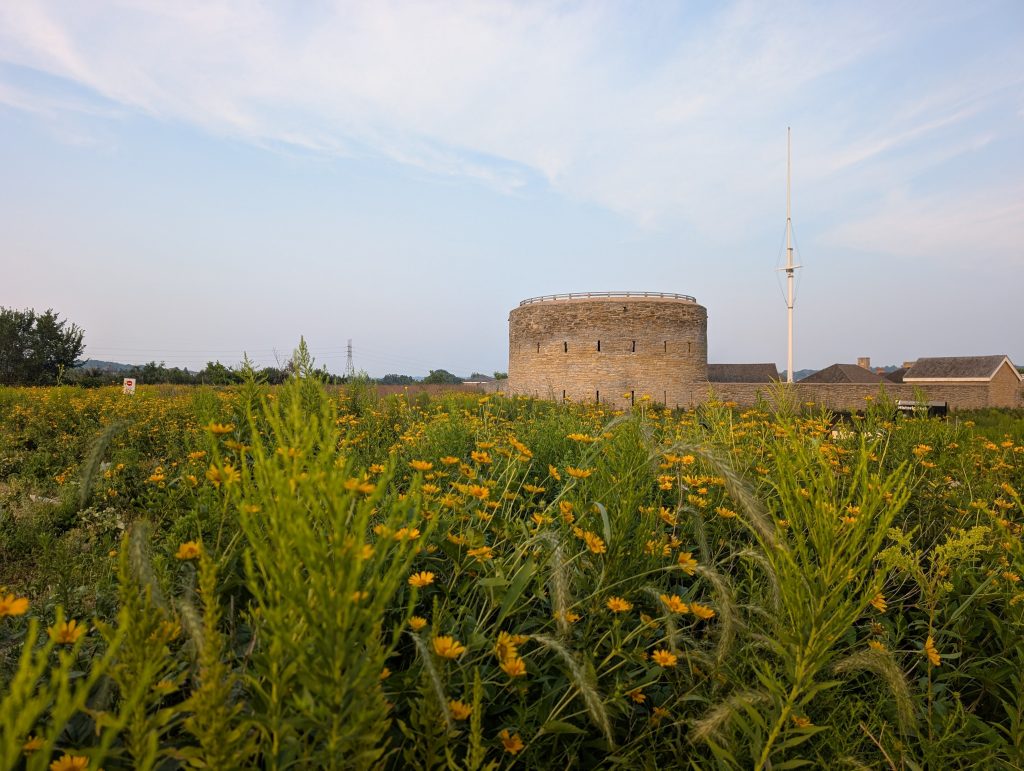
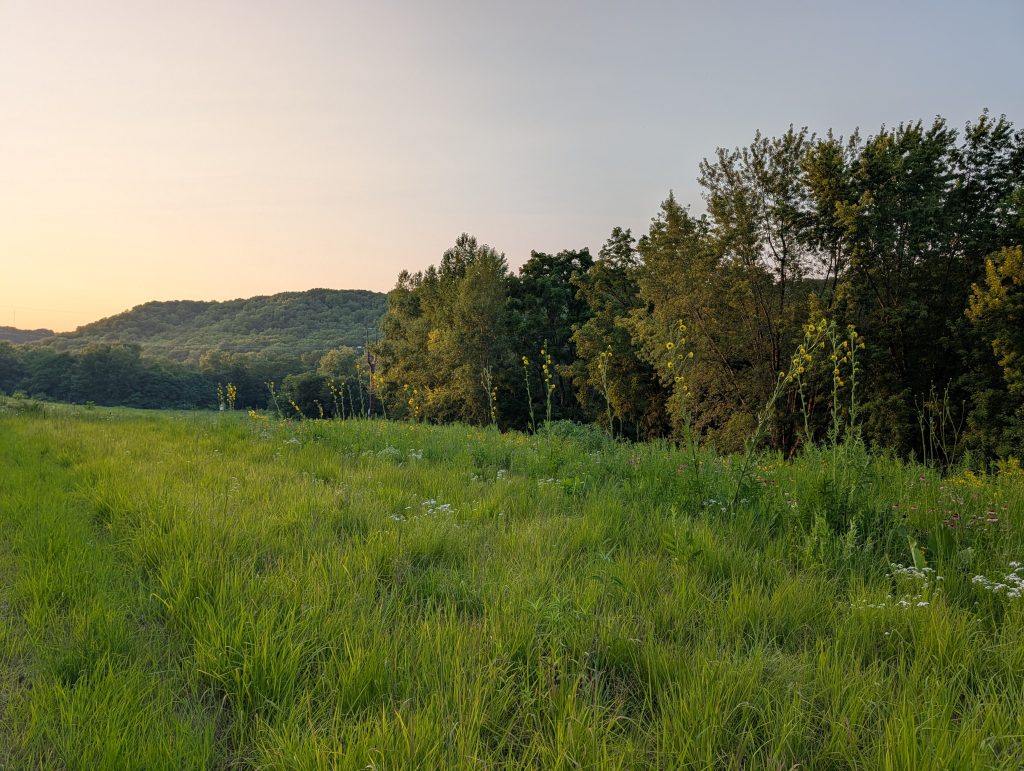
My interest in native prairies goes back to 2014 when I was graduating high school, but I didn’t start my first proper prairie until 2018, on an acre of exposed clay that even the weeds didn’t really want to grow on. That prairie is now a sea of thick grass, accompanied by other mixed prairies around the farm, and more manicured landscaping around the house.
Prairies, tallgrass and shortgrass both, are the heart of North American native landscaping. They are also one of the world’s most devastated ecosystems, with around 99% estimated to have been destroyed, because prairies made excellent soil for agriculture. What wasn’t plowed into grain was overgrazed by livestock, gradually eating away many native species. And some was under-grazed, without buffalo and wildfires to keep back the trees, it turned to forest.
Forest is good but it actually can’t maintain the same levels of biodiversity as a prairie. Prairies also do a better job of capturing CO2, because they store it underground in roots, while trees, which capture a lot of carbon, also release much of the carbon again when they die and rot away. Actually the best landscape is a savanna, a few trees providing habitat for birds while most of the sun can still reach the prairie itself. But be warned, trees are weeds, a few trees will try to become a lot of trees without management.
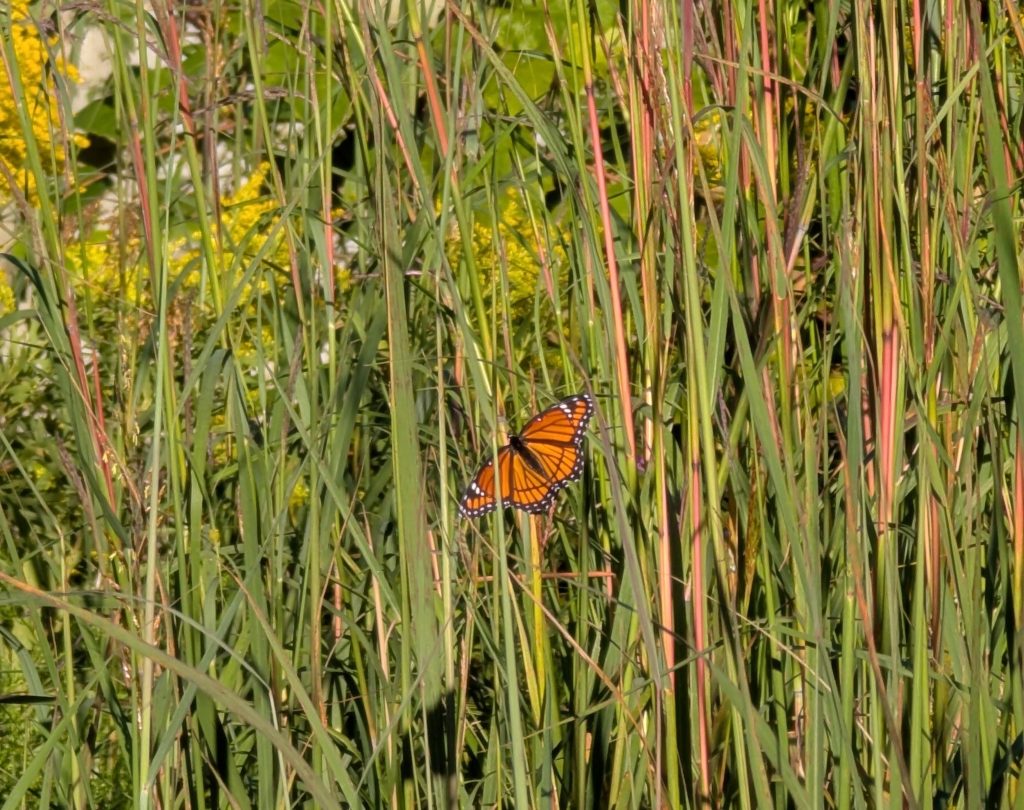
What I love most about a prairie is that, once established, a prairie is constant flowers from June until frost. That is particularly noticeable in August and September, when most of the classic landscaping plants are done flowering, the prairie is still filled with a sea of yellow. Prairies are also tolerant to all kinds of bad soil and bad weather from drought to bitter cold, and once established are low maintenance.
Why Native Prairie Plants?
- Excellent Late Summer to Fall Blooms
- Generally tolerant of bad weather (drought) and bad soil*
- Supports lots of birds, pollinators
- Once established, generally low maintenance
- Sequester CO2 underground (vs trees which fall down and rot)
- Deep roots help water drainage and infiltration (10 to 20+ feet root depth) and are good for erosion control
- Tallgrass prairies are likely the world’s most destroyed ecosystem, over 99% have been destroyed
What I don’t love is that most prairies I see are ugly. They are full of invasive weeds. They are half-abandoned projects never taken to completion, because starting a proper prairie takes a lot more time, expense, and knowledge than most people expect.
For most people, the best solution is probably “prairie lite” which is bringing in native plant clusters into more managed landscaping. Trying to turn your whole yard into prairie at your first pass is likely to be too frustrating (but not impossible). I’ll write about “prairie lite” more in a minute, but first let’s explore the ‘full prairie’ option.
The first thing to do is to set your expectations. Prairie really does take years to look its best, 3 to 5 years, and for the first year or two it’s a tough uphill battle against noxious weeds. Most of the weeds we know are plants that are really good at growing quickly in disturbed soil (large patches of disturbed soil were rare in prairies, so native plants are usually better at “filling in after a fire” not “giant empty patch of dirt”), and a lot of our soil has a deep seed bank of thousands of these weed seeds. The good news is that established prairie is quite good at resisting invasion by further weeds.
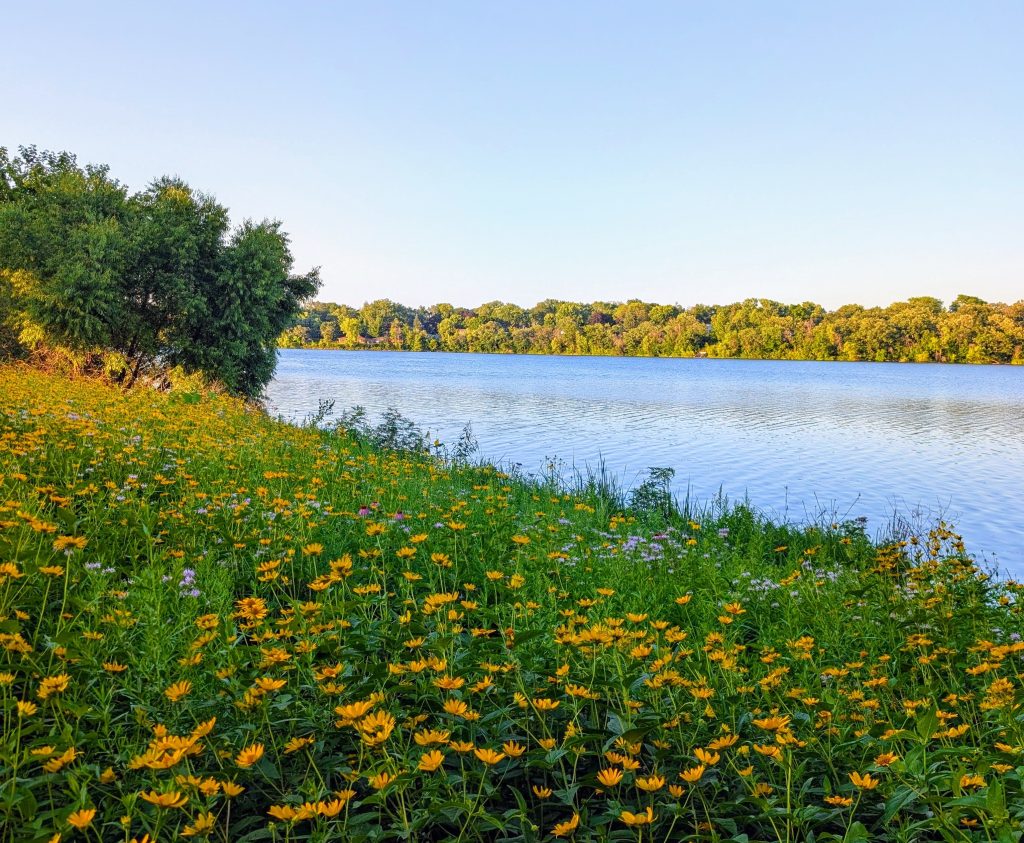
Proper elimination of weed seeds in a new prairie plot is the most important thing, pretty much everyone agrees on that. For our most weed prone prairie, it was nuke (herbicide), till, nuke, nuke. On the other hand, the exposed clay subsoil was already so poor even for weeds that no prior control was needed (but it’s only growing grass well). Black plastic landscaping cloth works as well on a smaller scale (I’m less happy with thick cardboard, but it’s the plastic free equivalent), kept down long enough (or cycled on and off) to kill the weeds by a lack of sun.
You don’t need controlled burns, although if you are a city or large business it’s worth considering. Mowing is the most accessible option for managing a prairie at scale. Most prairie plants adapted to being munched on by large animals, which is what mowing basically is. Mowing should generally be quite high, many standard lawn mowers may not even go that high. Four inches is probably the minimum and twice that is better.
I have seen mixed results with mowing. It often looks pretty sad after mowing but usually looks better the next year for it. The safest, most cautious approach to mowing is to just mow in the early spring (or late fall) when plants have put back all their energy into the ground and seeds have fallen, with the main goal being to take out any trees that are starting. That is really the only mowing that should be needed after the plants are established, but often more than that may be needed when first getting established. There are a few weeds that mowing can unfortunately help. I’ve seen this with vetch, which is common at the farm, where it can recover faster from mowing than native plants and makes the problem worse. My recommendation is targeted mowing, surveying (walking) the field for areas with more weeds, then selectively hitting areas that seem to have a weed problem. Apparently prairies burned every 2 to 3 years on average, some even annually, and needed to burn every 3 to 5 years or so to resist tree invasion, often in the fall. Mowing stands in for both buffalo and fire.
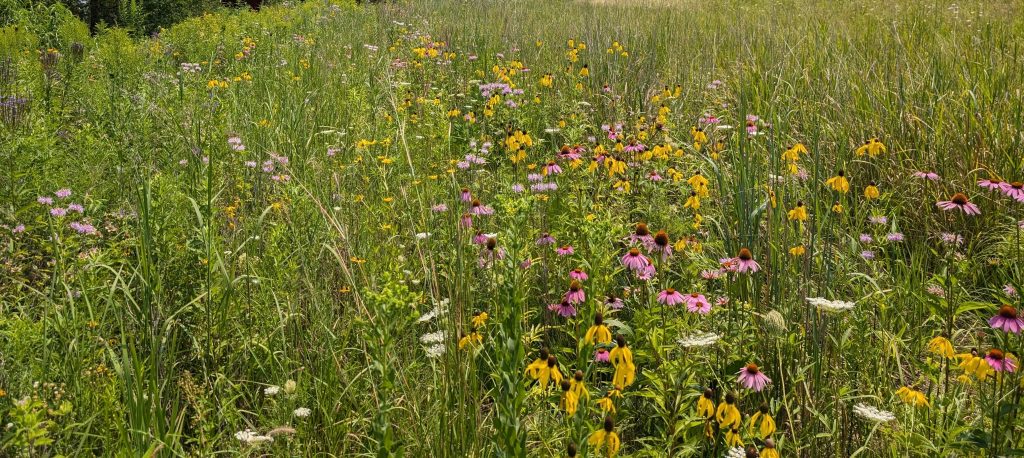
My best looking prairie is the prairie that I hand weeded. I found Google Lens very helpful for figuring out which plants are the ones I want to keep (right now, fully multimodal AI like ChatGPT are still getting plants wrong sometimes, but I expect soon they will be pretty good, Lens does a reverse image search which finds the rare species better). Hand weeding does involve diving into thick vegetation with bees and spiders around (no stings yet for me while weeding the prairie though). For both mowing and weeding, ideally do so before the weeds go to seed, or else you just become a weed distributor.
Our neighbors have turned a bunch of their corn fields into CRP, a government program for protecting sensitive erosion prone land. What I learned from that is that the quality of the site prep and quality of the seed mix really do matter. While their fields are generally a decent environment, they are less vibrant, mostly due to using a seed mix cheap enough for 100 acres. I have gotten the majority of my seeds (and some plants) from priariemoon.com (who are just down the river in Winona) but there are plenty of options as well (likely not exactly local, but at least a good supplier for your region).
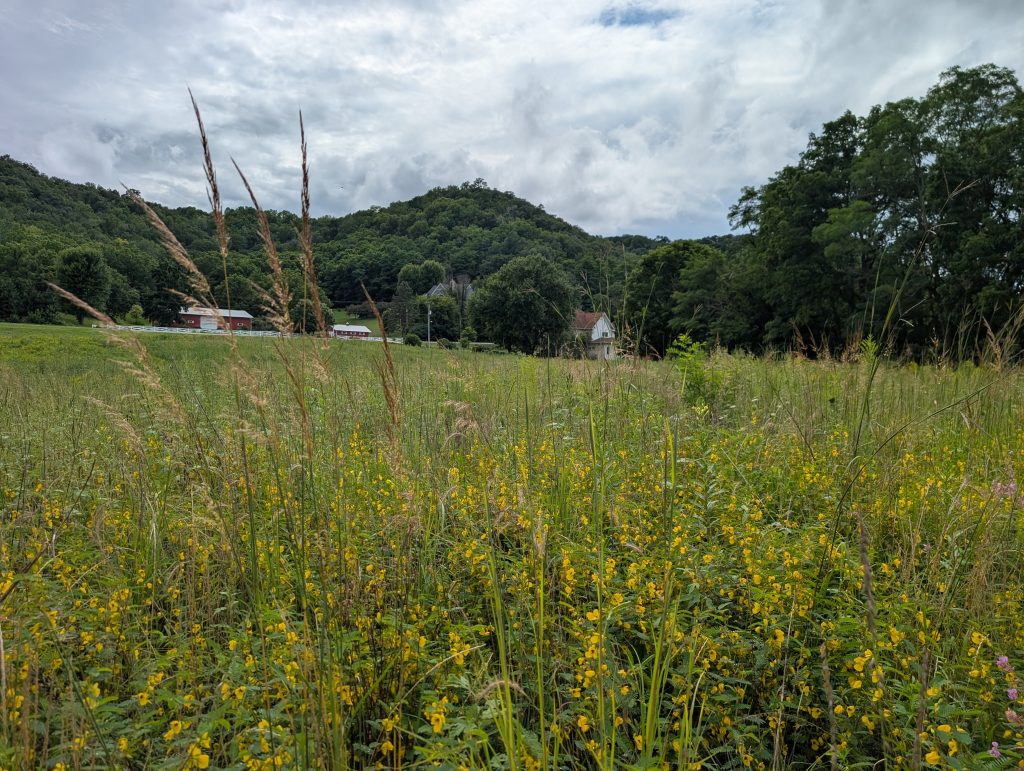
Prairies take at least 3 years to start looking their best, and require at least two years of fairly intensive weed management. Prairie also is slow to start in spring, often looking rather pitiful until later in June. One thing you can do to make the first year of planting more cheerful is mix in some annual plant seeds like cosmos, zinnias, and marigolds. They can boost the first year flower output while the prairie plants are still getting started. I have also over-seeded with extras of some of my favorites like brown eyed susans, early sunflower, and swamp milkweed. Prairie was something like 80% grass in most cases, but no reason you can’t your finger on the scale a little and add some more flowers.
One thing to know is that most native seeds don’t germinate as easily. Most need cold scarification (ie a long soak in winter). This is generally fairly easy to replicate (or solve by planting in the fall). Even with this, some seeds seem to prefer to wait a year or two before germinating. That said, I’ve generally had decent luck starting them indoors. If you don’t want to put quite as much effort in on weed seed bank depletion, one solution for smaller plots is to start with bigger started plants, giving the prairie plants a head start.
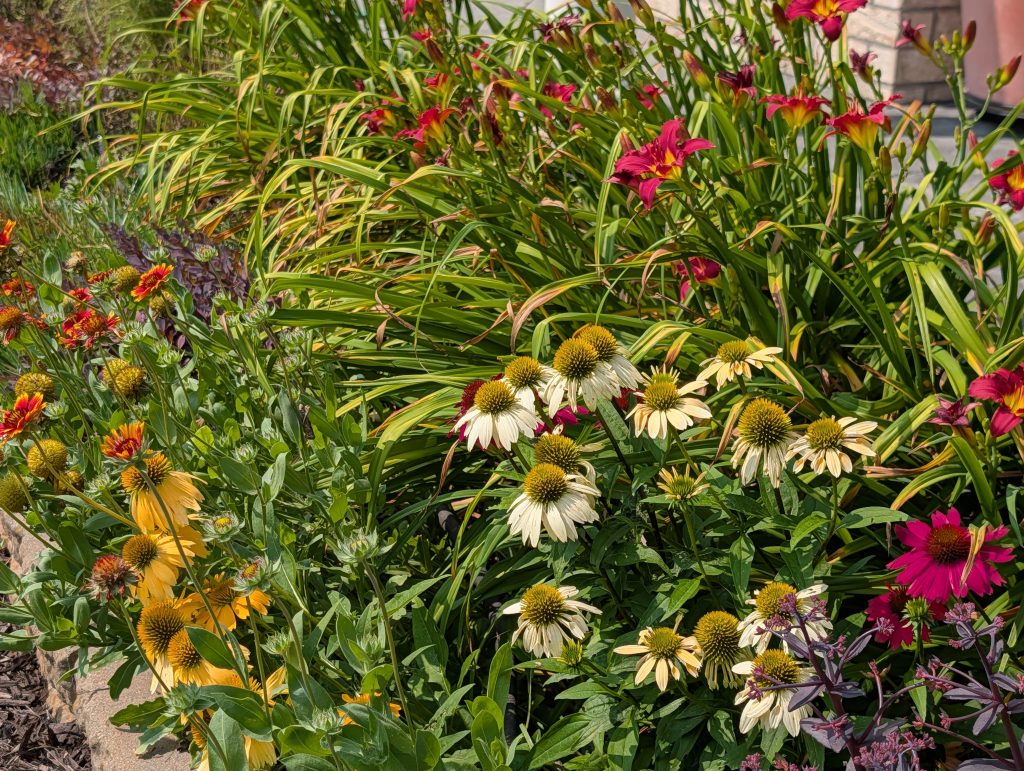
When it comes to bringing natives closer to home, here are a few design tips. Firstly, I would generally err on the side of isolation from other garden beds, such that you can beat the natives back with a mower or hedge trimmer to keep them from overrunning your roses (etc). Some natives are well-behaved but many can get carried away if they are doing well. Secondly, consider getting named cultivars, of which there are an increasing number available. They are often selected for better garden behavior (although echinacea cultivars are stunning but seem to be die a lot in our more wet soil. The cultivars seem more susceptible to fungus versus the purple native type). Thirdly I would start with seed indoors or in raised gardens, or with purchased plants, and aim to plant in clumps surrounded by landscaping cloth or thick mulch.
If you are looking at making a native-centric flower bed, here is a starter collection to consider: big bluestem grass (‘Blackhawk’, ‘Red October’) + Prairie Dropseed grass (‘Tara’) + purple asters (‘Purple Dome’) + coneflowers (mixed cultivars) + rudbeckia (‘Cherokee Sunset’) + milkweeds (especially swamp milkweed) + bee balm (cultivars such as ‘Bubblegum Blast’ and ‘Balmy Tricolor’) + queen of the prairie + native iris (‘Purple Flame’, I suggest planting a few together as they are thinner than siberian iris) + gallardia (‘Arizona Sun’) + low growing coreopsis (‘Moonbeam’) + false blue indigo (well behaved enough you often see it corporate landscaping here, one of the earliest bloomers of the lot) + garden phlox (“Jeana”) + early sunflower (‘Burning Hearts’). I would probably add some tulips for spring color (wild hyacinths are a nice native option for spring bulbs but cannot rival tulips).
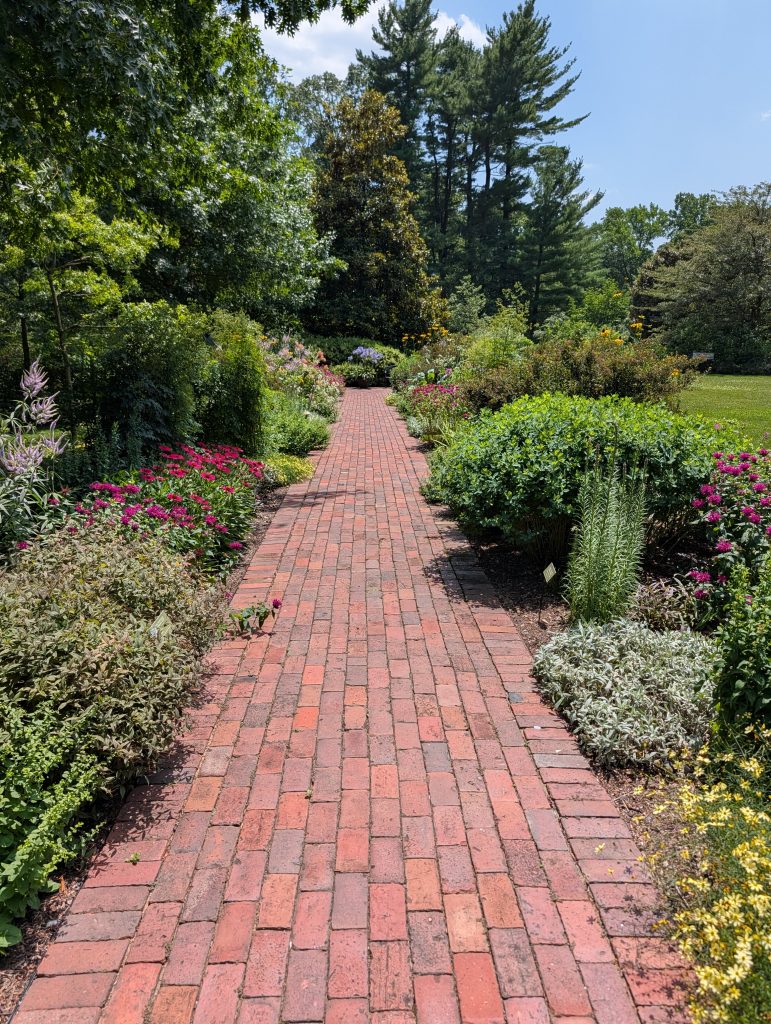
General names for native plants to be aware of that you can find as more well-behaved cultivars: Echinacea, Bee Balm (Monarda), some Hydrangeas, Gallardia, Blue False Indigo (Baptisia), Black Eyed Susans (Rudbeckia), Sunflowers (Helianthus), Phlox, some Iris, and Coral Bells are some example of native plants you can find as refined landscape friendly cultivars. Sumac, Buttonbush, Virginia Sweetspire, Ninebark, and Red Twigged Dogwood are some native shrubs (I’m also a big fan of native elderberry). In the shade, various ferns (maidenhair fern, christmas fern, lady fern, ostrich fern), woodland and creeping phlox, and Virginia Bluebells are usually easy to find.
A thick glade of ostrich fern is one of my favorite shade landscape features, but they burn in the dry and sun and can be aggressively spreading when happy.
A personally think perennial sunflowers are overlooked. I’ve got a mix of early sunflower and showy sunflower that together provide quite a long blooming season. But they do tend to spread. The Maximilian sunflower is stunning in the prairie but it is huge.
Longwood Gardens had a garden bed that I believe was a lot of compact Little Bluestem (‘Jazz’ perhaps) planted in a tight orderly grid, with occasional short flowering plants and colorful foliage plants mixed in. While not truly a “lawn” it did give the illusion of one from a distance, and might be an option for people needing a more ‘lawn like’ look while still being a native prairie.
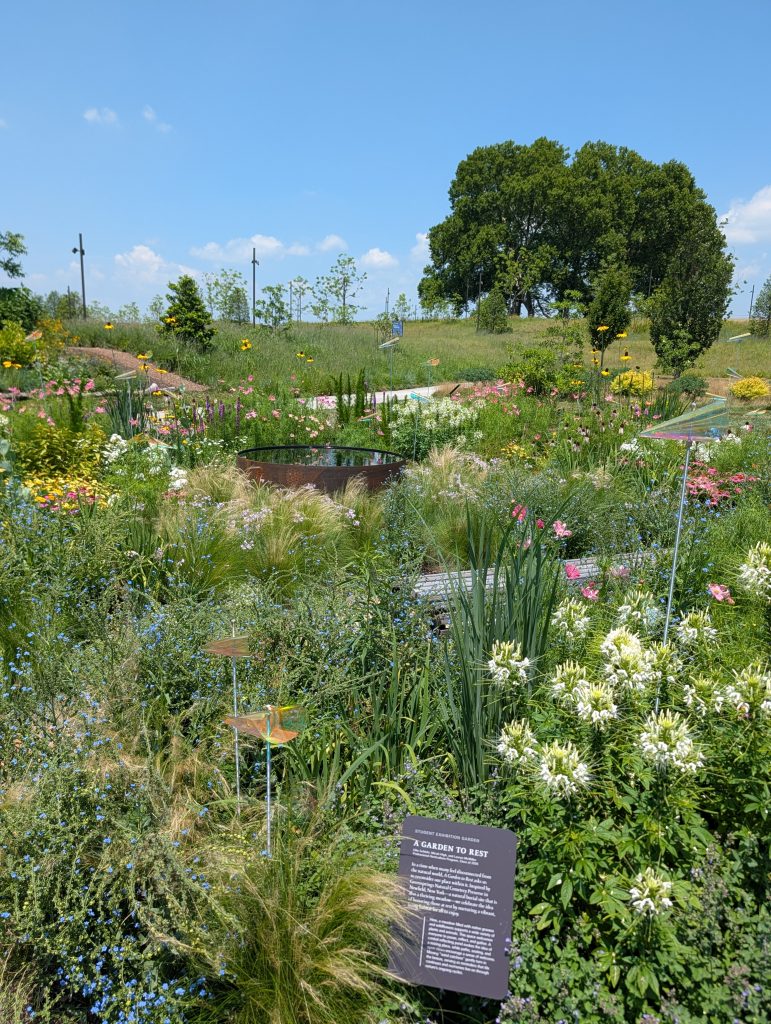
There are a lot more useful native plants besides these, but one of the reasons you don’t see them in your local garden center is they often do a little too well in the garden, spreading by rhizomes. Goldenrod is not a major allergen (confused with ragweed as it blooms at the same time), but it loves to spread by seed at our farm, annoyingly so. Spreading by rhizome is most easily solved by planting in isolation, using a lawn mower, hedge trimmer, or other power tool to keep them contained. Mixing a bunch of native plants together is usually fine, they can grow among each other happily, but keep them separate from your more fragile and picky exotics.
It can be hard to tell which native plants will do well in your soil and climate. I was talking to a volunteer at the Mt Cuba Center that says they struggle to grow swamp (rose) milkweed, while at our farm the swamp milkweed freely volunteers everywhere (even in drier soil which it’s not supposed to like). “Native” doesn’t necessarily mean it will do great in your particular yard. On this note, I generally treat “native” as anything from the whole continental North America, as generally things that aren’t native to my particular region (say alpine plants of the Rockies or tropical plants of Florida) simply won’t grow well in my location anyway, and if they do, more power to them. However there are some native plants which have grown a bit invasive outside of their narrower native range, the black locust tree is one good example. I wouldn’t worry about it for starting out, but if you really get into native planting, diving into rarer plants and focusing more on those truly native to your exact area, can be interesting and fun.
One interesting example of this plant preference are the compass plants which are growing in a straight line on the line between “bad” soil and good soil on my flagship prairie. Despite being planted on both sides of the line, they only grow right on the line. That is apparently their happy balance. Such a clear line in the soil exists as the result of a previous bulldozing decades ago. The native grasses generally seem to do best in poor soil, but mountain mint, compass plant, and echinacea do seem to persist in the exposed clay, albeit not as showy with flowers as their kin in better soil.
Black walnut seems to help keep our shade natives protected from some invasives, with its roots releasing juglone that kills many non-natives (and some natives, but mostly non-natives). I’ve noticed invasive buckthorn grows in our forests around the farm, but never near walnuts. If you are considering a mix of prairie and trees, I strongly encourage you consider it. It’s also a valuable lumber tree once it gets big.
In my experience, the prairie at the farm has fewer mosquitoes than the lawn portions (but a lot more bugs generally). No studies seem to have compared prairie to non-native landscaping directly, but a study found that perception of mosquito problems was more heavily influenced by whether people viewed the landscape as “messy” rather than the actual number of mosquitoes present. So if neighbors complain about prairie bringing mosquitoes, it’s a cognitive bias, not likely a factual claim.
It is definitely true that prairies bring in a lot more life. More birds. More rabbits. More butterflies. All of this is one of the reasons I love prairies. Watching 1 acre of mowed field go from practically a desert to packed full of life is really satisfying. However this does mean you should keep a mowed perimeter between large native plantings and your house (a few native plants against the siding aren’t a worry). I also recommend a mowed trail through the prairie if it is large enough. It makes accessing it for review easier and it is just nice to walk through.
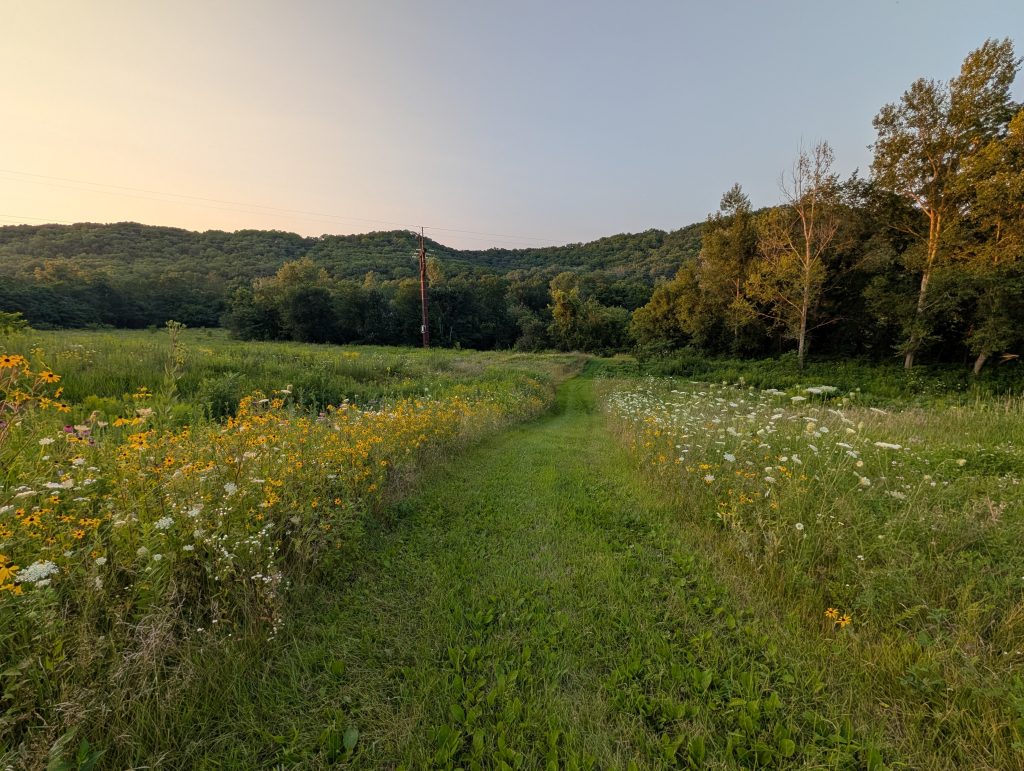
One of my questions has been to try and figure out what the actual native prairie species were that were present around the farm are. It’s a bit difficult because the state and people like myself have started to introduce prairie plants, so hard to say what was truly historically present in the area (most was completely destroyed by tilling and grazing). The farm is in the Mississippi River Valley, and likely was mixed forest (early paintings show areas of forest and areas of open grassland coming up to the river, no paintings of our farms little valley though). I haven’t yet bothered to attempt the grasses. The shade understory native mix is pretty vibrant but I’ve never done a proper study: I’ve seen yellow ladys slipper, columbines, large trillium, and blue violets. Lots of happy native elderberry. In the sun at least two species of goldenrod, common milkweed, monarda, and hairy sunflower. My aunt’s farm, 10 miles in from the river and more isolated from modern plantings, has jerusalem artichoke, native phlox, late goldenrod, wild senna (a bit outside its range but definitely it), short green milkweed (not completely sure), and probably one or two more species of golden rod and helianthus. Just across the river in Wisconsin I’ve seen mountain mint, new england asters, and joe pye weed out on my bike rides.
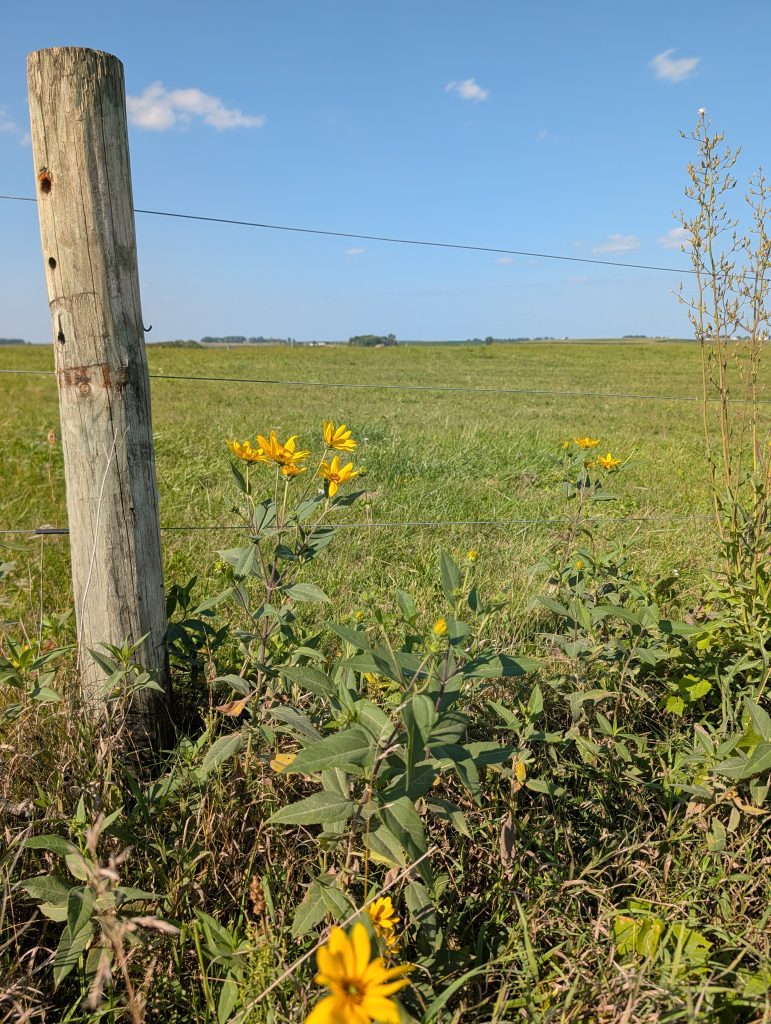
Generally, it is worth seeing what native plants are already present, but it is also quite hard to definitely ID which of the species it is sometimes.
An external guides:
https://extension.umn.edu/garden-and-home/yard-and-garden/gardening-in-minnesota/planting-and-maintaining-a-prairie-garden
Colin Catlin 2026