
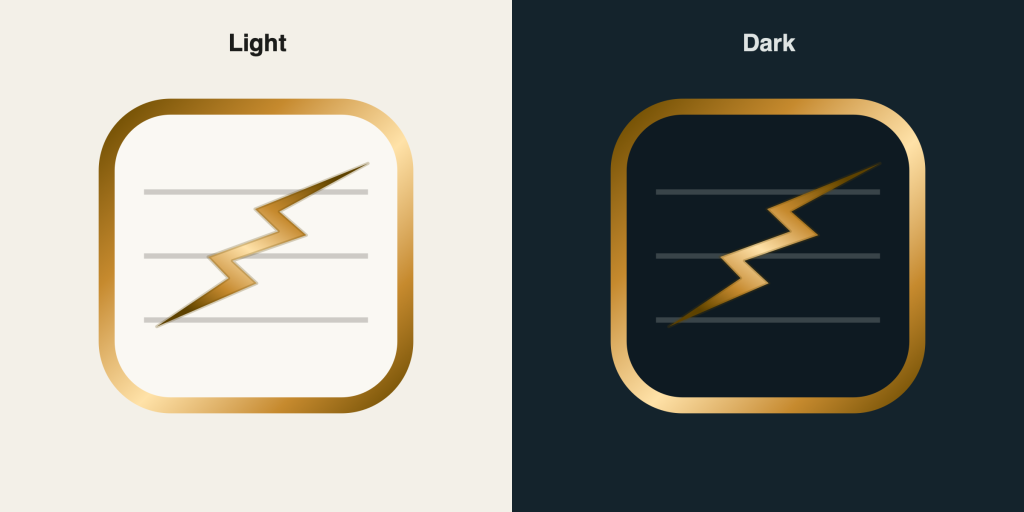
I am mostly here to brag a bit. I’m so proud of myself. For what? For making some SVGs. Icons to be exact, for my AutoTS forecasting project to use as launch icons for any associated apps. And to be fair, Claude and Codex did most of the heavy lifting on making the SVG code, but I take full credit for the design.
As I have learned over the years, forecasting lends itself terribly to icon design. The reason is that time series 📈 don’t really lend themselves to distinctive logos. Most suggestions AI could throw at me involved crystal balls 🔮. Really, it’s a science, I swear, not voodoo.

For my AutoTS progressive web app I had decided to go with a mixture of Material Design 3 (md3, flat icons, which while not as pretty as say, Apple’s Liquid Glass, I have found is nicer on my eyes after longer use of the apps) and Classical Antiquity. The ancient Greece and Rome part comes around because, well, I have a bachelor’s degree in that, and my github username is winedarksea, a reference to Homer’s Odyssey, and I needed something to run with. I have always had an interest in ancient colors, how they talked about them, what colors they could make with the dyes they had, and how colorful many ancient artifacts were in their original form (most white marble in Rome was actually painted in a rainbow of colors). I also tried to go beyond dye colors to include other ancient color sources (stone, metal) which would have been part of the iconography. Using a metallic gradient of bronze here goes against the flat design principles of md3, but I think it contrasts well with the flat background when used sparingly.
Trying to reconstruct a color palette from the past is more fun than trying to randomly pick colors off a color wheel.
For icon shapes, though, Greek and Roman isn’t much to go on. The Roman idea of seeing the future involved auguries, literally reading the entrails of dead animals. That didn’t really seem like something that would work on an icon, entrails being too complex to show on a simple icon. The Greeks talked to some women living in a cave (possibly high on cave gases) and talked to the dead to the learn the future. Not much to use there either. Eventually I figured that a lightning bolt looked something like a time series, and here we are.
I went down a fascinating sidetrack into how the ancient world rendered lightning bolts in illustrations. Turns out the modern zigzag is not authentic for Jupiter. The Greeks used a sort of “organic double ended trident” to show lightning (which actually is in some ways a bit more accurate to how lighting really looks, flowing it multiple directions, than our little zigzag of today). This imperial Roman relief of Putto with lightning bolts is perhaps one of the first clear examples we have of something like the modern bolts, but this is actually around a bundle with wings, that together make the full lightning bolt there (I guess the wings flapped really fast and that’s how the lightning moved?). Apparently the early Christians twisted themselves into knots trying avoid lightning bolts because those were associated with a pagan god, and tended to focus on ‘rays of light’, and generally our modern lightning bolt symbol does seem a mix of a ‘ray of light’ and true lightning.
I think it’s mildly amusing that I am channeling gods with my design reference here to Jupiter/Zeus. That makes this icon a true icon, which traditionally means a religious image.

Anyway, lightning bolt in hand, I now need to make it clear I wasn’t selling lightning but talking about forecasting. I tried adding an L-axis, bars, and other time series lines, but none made a clean icon. Just adding a few horizontal grid lines from a graph does seem to work though. I didn’t think it would suggest “graph” strongly enough, but it seems to be okay.
To be fair, these icons are not perfect. They don’t render well in the tiny favicon size. The solution is probably just to make the lightning bolt bigger and thicker, but it was surprisingly hard to get a good looking lightning bolt already, so we’ll save that for a future time.

Colin Catlin, 2026