
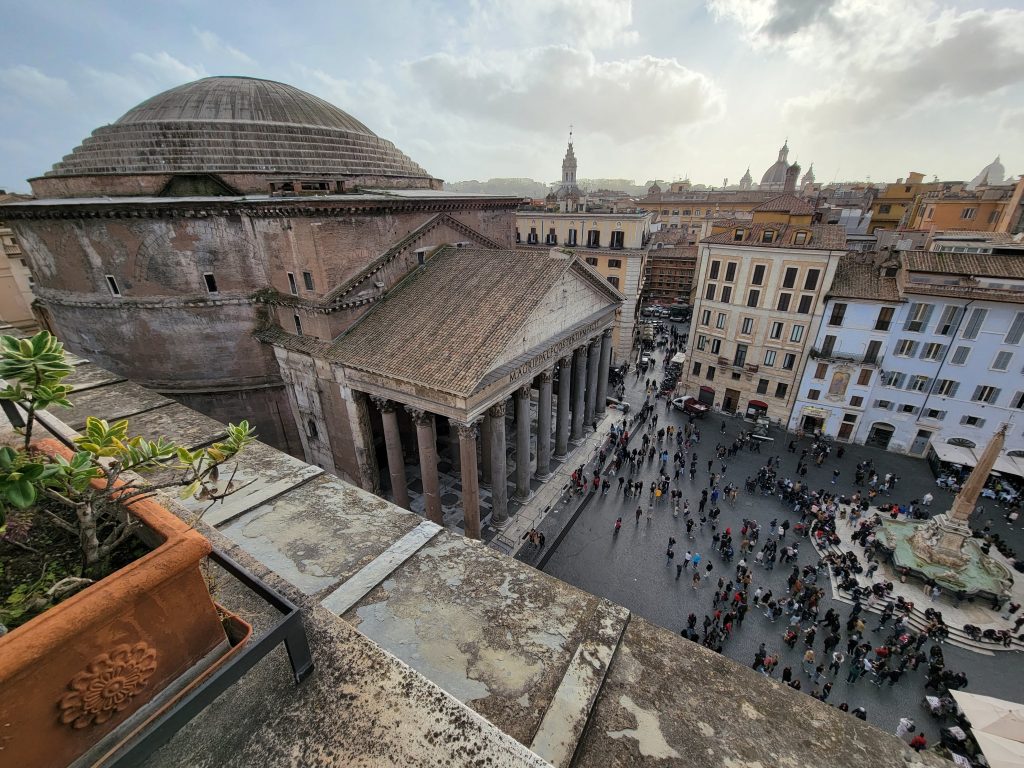
Why do We Care?
- People die in concrete collapses all the time (Surfside Condos, 2023 parking garage collapse in NYC, etc.)
- It costs us a TON of money to keep concrete infrastructure from not falling down even more often.
- It’s more eco-friendly. Concrete is a huge carbon cost. With standard concrete with only a 50 year lifespan, that’s massive CO2. Now divide that across a much longer lifespan, and the carbon cost starts to look less bad.
Why Do You Care?
- You likely have or will build concrete structures in your home and want them to last with minimal maintenance
I thought Concrete was rock, how does it fail so quickly?
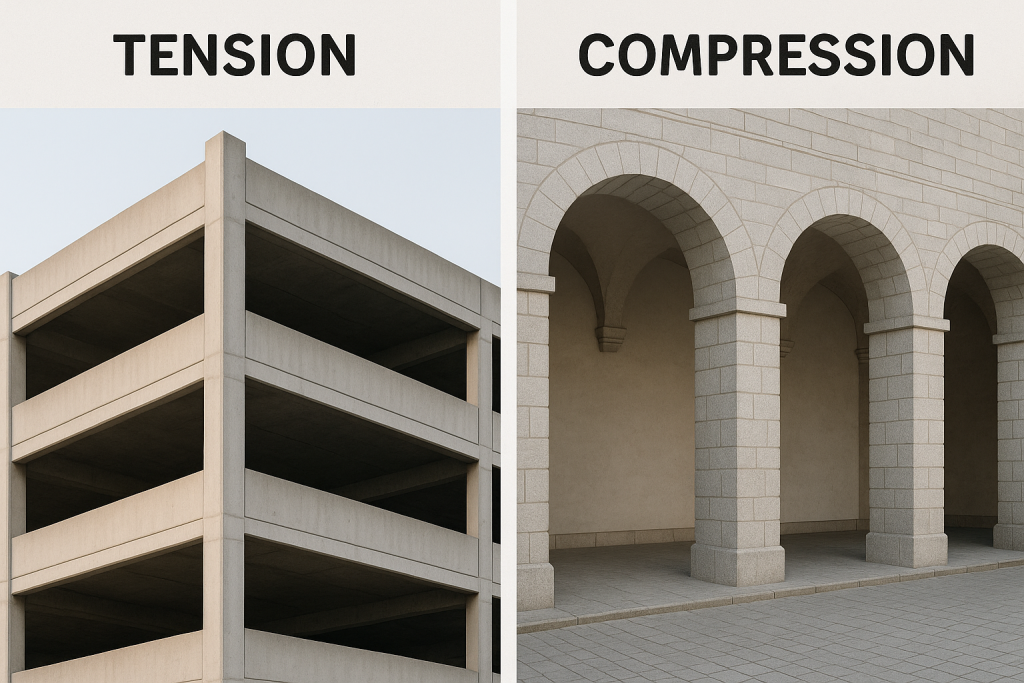
It’s mainly the rebar and “tension” based (rather than compression based) building techniques that require rebar in concrete.
Rebar is steel and rusts. Especially when salt gets in, which it does over time from either road salt (winter) or sea (ocean breeze) salt. And of course, various other mistakes can happen during design and build
Secrets to Roman Concrete, opus caementicium
Compression-based architectural forms that reduce tension and cracking. This has two problems today because it uses a lot more concrete, which is expensive, but also adds tons of weight, buildings can literally sink if too heavy. Exterior stone or brick facing may also have helped in some cases
Volcanic ash (pozzolana), enabling durable pozzolanic reactions, lightweight
Self-healing lime clasts (from hot mixing lime), which reactivated in response to moisture and cracks, forming limestone in cracks.
Reactive volcanic aggregates that formed strengthening minerals over time. Similar to pozzolana, aluminum and silica in the aggregates react to form calcium silicate hydrates (C-S-H) or calcium-aluminum-silicate hydrates which are more durable and water resistant.
Survivorship bias also, we marvel at pristine 2000 year wonders like the Pantheon, and don’t really notice as much those that failed to last.
Romans built lots of buildings using ‘tension’ based designs but the compression based designs (bridges, aqueducts, Pantheon, Colosseum) are the ones that survived best.
Rebar Options
Carbon steel has a very close thermal coefficient to concrete, which means in freeze-thaw cycles it matches the expansion/contraction well, which is very important.
Stainless steel isn’t quite as close thermally, and is 5x the cost. But doesn’t corrode.
Fiber, Carbon Fiber, and Basalt are all modern alternatives, but they lack the same tension strength, and are not as well qualified yet for important projects. Glass/basalt fiber bars do seem a good option to consider for slabs like driveways.
(fun fact: basalt rebar is made from volcanic rock, melted like glass and drawn into strings)
Epoxy coated steel was a longtime solution, but practice shows it often fails too quickly due to cracks in the coating
Galvanized steel is the best solution for most places. <– best general solution
Fiber (macrofiber mixes) for slabs remove the need for any rebar. But won’t work alone on “seriously” structural components. <– best where appropriate
Recipe
- Use a stable, well compacted base with excellent drainage
- Slope the surface and prevent water (especially salt water) from pooling
- Keep conditioned and dry where possible (ie concrete floor inside a home)
- Have good concrete coverage of rebar (rebar 3” deep). Same with internal elements (sleeves, conduit) and include as well the depth of any bolts that may be drilled into it (avoid these near critical structural elements).
- Galvanized steel lasts longer, especially paired with zinc anodes. Stainless steel in areas of particular concern. Note galvanized and zinc should not be grounded if used. Don’t connect mixed rebar metals directly, use a dielectric.
- Use a concrete mix with low water content, possibly SCMs (pozzolans), plasticizers, air entrainment admixtures (for freeze thaw), and other admixtures – provider can recommend a mix
- Use control joints and expansion joints (those lines/sections cut into concrete you see). Most relevant for larger slabs, but often still seen on smaller ones (like sidewalks, in part due to sidewalk base preparation usually being low quality, and light weight of sidewalks being vulnerable to tree roots)
- Use concrete sealants and/or water resistant membranes on the surface
- Fiber mixes (macro and micro) are an excellent idea for keeping down cracks
- Macro fibers can be a bit less pretty for highly polished concrete slabs, however.
- Keep warm and moist during concrete curing
- Don’t use deicing salt on rebar reinforced concrete
Colin Catlin, 2025